Different Payment Methods per Product in Woo
Offer different payment methods for different products in WooCommerce: how the gateway filter works, a rules matrix, mixed-cart handling and a test checklist.
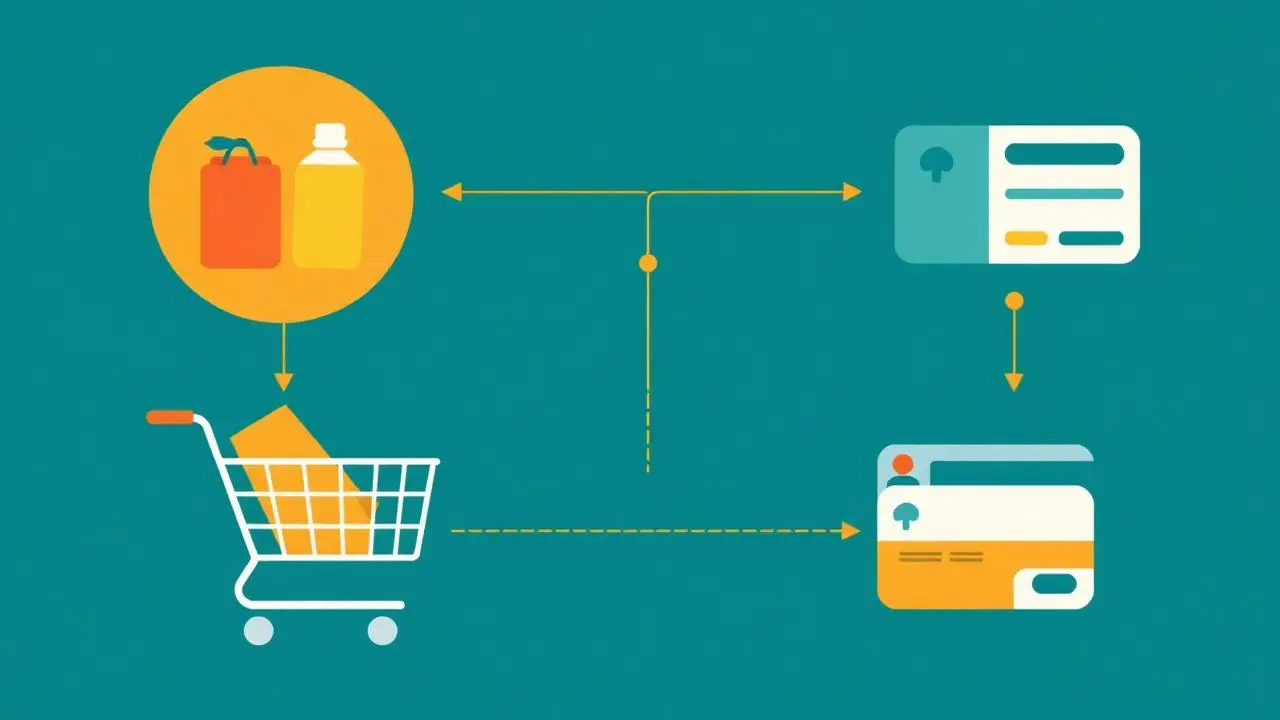
Most WooCommerce stores start with one payment policy for the whole catalogue, and most outgrow it. A dropshipped item cannot be sold cash on delivery. A pre-order should not be charged through a gateway you cannot refund easily. A wholesale pallet should go on invoice, while the same store's consumer accessories should not. All of these are the same requirement: different payment methods for different products in one checkout.
WooCommerce core has no setting for this. Gateways are enabled store-wide, and the only per-product knob is COD's virtual-order toggle. Everything else is built on one filter.
The one mechanism behind every rule
Just before checkout renders, WooCommerce passes its enabled gateways through `woocommerce_available_payment_gateways`. Whatever survives that filter is what the customer sees, on classic checkout, on block checkout, and on the pay-for-order page. Every conditional payment gateway technique in WooCommerce — product, category, user role, cart total, shipping country — is a different set of conditions evaluated inside that one filter.
Two consequences worth internalising:
- Hiding a gateway with CSS or JavaScript is not a rule. The gateway remains available server-side and an order can still be placed through it.
- Rules compose. Product, category and role conditions all remove entries from the same array, so their combined effect is an intersection — which is exactly where empty checkouts come from.
Start with the matrix, not the code
Before touching PHP or a plugin screen, write the policy as a grid. Products or product groups down the side, gateways across the top, allow or block in each cell:
| Product group | Card | Wallet | Invoice | COD |
|---|---|---|---|---|
| Everyday accessories | Allow | Allow | Block | Allow |
| Dropshipped items | Allow | Allow | Block | Block |
| Pre-orders | Allow | Block | Block | Block |
| Wholesale pallets | Block | Block | Allow | Block |
The grid does three useful things: it shows immediately that wholesale pallets and everyday accessories share no gateway (a mixed cart of the two is unpayable), it makes the rule reviewable by someone non-technical, and it becomes your test plan later.
Implementing it
For a small, static grid, a snippet works:
```php add_filter( 'woocommerce_available_payment_gateways', function ( $gateways ) { if ( is_admin() || ! WC()->cart ) { return $gateways; }
// gateway id => product ids that forbid it $rules = array( 'cod' => array( 812, 913 ), 'paypal' => array( 1044 ), );
foreach ( WC()->cart->get_cart() as $item ) { $id = (int) $item['product_id']; foreach ( $rules as $gateway_id => $blocked ) { if ( in_array( $id, $blocked, true ) ) { unset( $gateways[ $gateway_id ] ); } } }
return $gateways; } ); ```
Hard-coded product IDs are the weak point: they break the moment someone rebuilds a product, and nobody in wp-admin can see the policy. Once the grid has more than a few rows, move it into WooCommerce Payment Gateway Per Product, where each row of the matrix is a rule a shop manager can edit, and product, category, role and cart conditions live in one place.
Handling the mixed cart
Three defensible strategies, in the order most stores should consider them:
- Strictest wins. A gateway survives only if every item allows it. Predictable and safe; the default choice.
- Block the combination. When two products share no gateway, stop it in the cart with a message: "Wholesale pallets must be ordered separately from retail items." Better than a checkout with no options.
- Split into two orders. The best customer experience and the most work, since it needs a cart-level split flow. Worth it only for stores where mixed carts are common.
Whatever you choose, add the empty-list guard: if the filter is about to return zero gateways, restore a designated fallback or show the cart notice. A checkout with no payment methods and no explanation is the single worst outcome of this whole feature.
Rules that quietly conflict with other features
- Subscriptions require a gateway that supports recurring payments. Exclude subscription products from restrictive rules or the renewal will fail, not just the first order.
- Deposits and part-payment plugins register their own gateways; check the gateway ID they use before writing a rule that removes "everything except cards".
- Multi-currency setups sometimes register per-currency gateway IDs, so a rule matching one ID may miss its sibling.
- Free orders. When a coupon takes the total to zero, WooCommerce swaps in its no-payment flow; make sure your rule does not fight it.
Test checklist
Turn the matrix into carts and walk them all: each product group alone, each pair of groups together, one variation from each group, a cart that should be unpayable, a subscription product if you sell one, and one real order through a surviving gateway. Repeat on block checkout, and on the pay-for-order page for an admin-created order.
Where this fits in a wider setup
Payment rules are one of three levers stores usually pull together — payment, shipping method restrictions and checkout field rules. If you are building the whole picture, the WooCommerce plugins hub shows how the rule-based extensions fit next to each other.
Next step
Draw your grid, count the blocked cells, and check every pair of product groups for a shared gateway. Then build it — snippet for a two-row grid, Payment Gateway Per Product for anything that will keep changing.
FAQ
- Can WooCommerce offer different payment methods for different products?
- Not with core settings. Core enables gateways store-wide, so per-product behaviour comes from filtering woocommerce_available_payment_gateways against the cart contents, either with a snippet or with a rules plugin.
- What is the best way to handle a cart with two conflicting products?
- Use strictest-wins by default: a gateway stays available only if every item in the cart allows it. When two products have no gateway in common, block the combination at cart level with a clear message rather than showing an empty checkout.
- How do I stop the checkout from showing no payment methods at all?
- After applying your rules, check whether the remaining gateway list is empty. If it is, restore a designated fallback gateway or add a cart notice explaining that the items must be ordered separately.
- Do payment rules work with WooCommerce subscriptions?
- Subscriptions need a gateway that supports recurring payments, so any rule that removes those gateways from a cart containing a subscription will block the purchase. Exclude subscription products from restrictive rules.
- Where should per-product payment rules live: code or a plugin?
- One or two static rules are fine in a site-specific snippet. Rules that change with campaigns, suppliers or seasons belong in a plugin table where a shop manager can edit them without deploying code.
This article is part of our WooCommerce payments topic hub, where the related plugins and guides live together.